DFT (Dry Film Thickness) & Finish Excellence
This is all you need to know about dry film thickness while applying metallic paints with spray gun.
PAINT APPLICATION PARAMETERS
Syed Touqeer Abbas Shah (Paint Application Services Expert)
8/10/20252 min read
Dry Film Thickness (DFT) in Automotive Spray Painting: Why It Matters and How to Get It Right
In the world of automotive refinishing, Dry Film Thickness (DFT) is one of the most critical—and often overlooked—factors that determine the success of a paint job.
With over 20 years in the paint application field, I can confidently say: you can have the best spray gun, the best paint, and the steadiest hand in the industry, but if your DFT is wrong, your finish will never be perfect.
What is DFT?
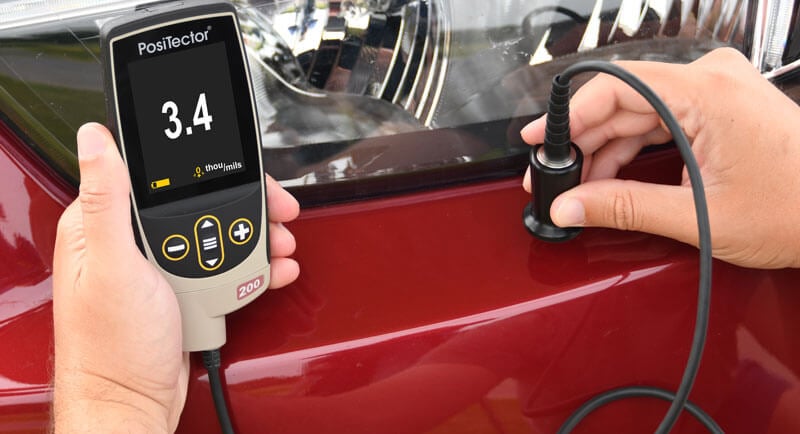
Dry Film Thickness refers to the thickness of the paint layer once it has fully dried and cured, with all solvents evaporated.
It’s usually measured in microns (µm) using a DFT gauge.
Why is DFT Important in Auto Refinish Painting?
Durability & Protection – Low DFT means less protection against UV rays, chemicals, and corrosion. High DFT can lead to cracking, solvent popping, or peeling.
Color Accuracy – Metallic and pearlescent paints are highly sensitive to DFT because the thickness changes how light reflects off the metallic flakes.
Surface Finish – DFT impacts gloss, smoothness, and the overall visual quality of the coating.
High DFT in Metallic Paints – Common Effects
Darker Shade – Flakes are buried deeper in the film, reducing reflectivity.
Loss of Sparkle – The metallic “pop” is muted.
Texture Problems – Orange peel, sagging, and solvent entrapment are more likely.
Low DFT in Metallic Paints – Common Effects
Lighter Shade – Flakes are closer to the surface, increasing reflectivity.
Poor Coverage – Patchiness and visible substrate.
Reduced Durability – Gloss fades quicker and corrosion resistance drops.
Color Shade Variation and DFT
Metallic paints work by orienting aluminum flakes in the paint film. The thickness of that film directly affects how light hits and reflects off these flakes.
Thicker DFT = deeper color, reduced sparkle.
Thinner DFT = lighter color, more sparkle but potentially patchy coverage.
This is why you should always aim for the manufacturer’s recommended DFT range, usually 40–60 µm for basecoats in automotive refinishing, unless otherwise specified.
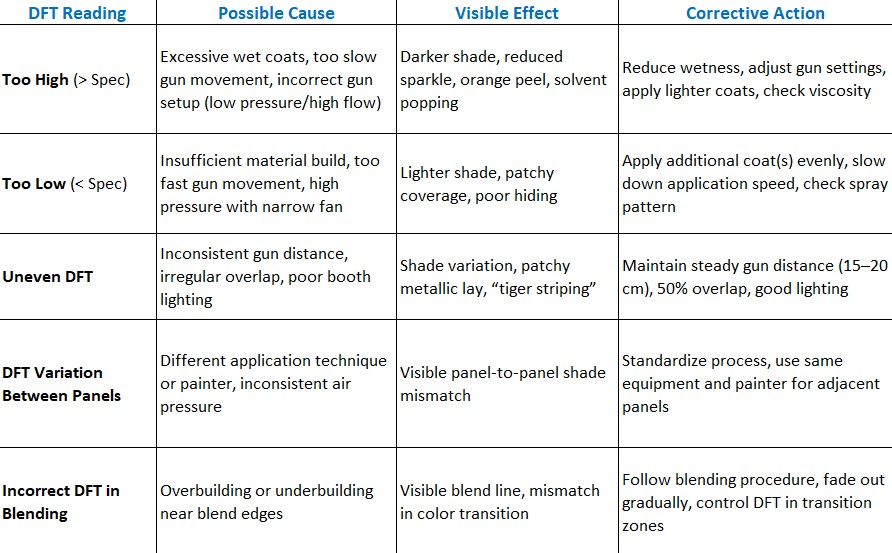
Troubleshooting Chart – DFT Issues in Metallic Automotive Paints
Pro Tips from the Line
Always measure DFT on test panels before starting the job.
Keep spray gun distance, angle, and speed consistent.
Maintain booth lighting that clearly shows metallic orientation.
Use a calibrated DFT gauge—guessing will cost you in rework.